 The healthcare industry is making a significant shift from volume-based to value-based care. Nowhere is this more apparent than in the Home Health Value-Based Purchasing (HHVBP) program. As Medicare moves further into value-based payment systems, home health agencies need to understand how HHVBP works, why it matters, and how they can succeed in a quality-driven environment.
In this article, we will break down what HHVBP means, how it is structured, why it was introduced, and the steps agencies must take to thrive in this value-driven landscape.
What Is Home Health Value-Based Purchasing (HHVBP)?
Home Health Value-Based Purchasing (HHVBP) is a Medicare payment model that adjusts reimbursement rates for home health agencies based on the quality of care provided, rather than the volume of services rendered. Under HHVBP, agencies are incentivized to deliver high-quality care that improves patient outcomes and reduces overall healthcare costs, such as hospital readmissions and emergency department visits.
Originally piloted by the Centers for Medicare & Medicaid Services (CMS) in nine states, HHVBP has since expanded to include all Medicare-certified home health agencies across the United States, including U.S. territories.
Unlike traditional reimbursement models that reward the volume of services provided, HHVBP rewards agencies that focus on efficient, patient-centered care that leads to better health outcomes.
Why HHVBP Matters in Home Health Care
The goal of HHVBP is threefold:
- Improving Care Quality: Agencies that deliver better patient outcomes earn higher reimbursement rates.
- Increasing Efficiency: By reducing unnecessary hospitalizations and emergency visits, HHVBP helps control Medicare spending.
- Promoting Continuous Improvement: By comparing performance across agencies, HHVBP encourages home health providers to elevate their care standards.
This model represents a paradigm shift in how home health care is delivered, focusing on patient well-being and measurable outcomes. It pushes agencies to continuously measure, track, and improve patient care.
How HHVBP Works: Performance, Scoring, and Payment Adjustment
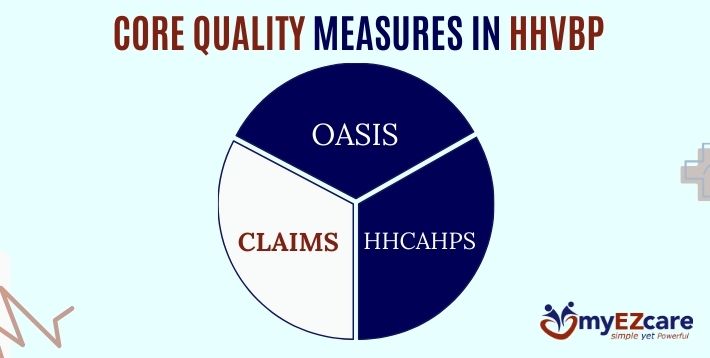
Under HHVBP, agencies receive a Total Performance Score (TPS) based on several quality metrics. These metrics include clinical outcomes, patient experience surveys, and claims data — all of which are already being reported under existing programs like the Home Health Quality Reporting Program. This means that home health agencies don’t need to submit additional data, making the process more efficient.
Key Elements of the Model:
- Performance Year vs. Payment Year:
Performance in one year impacts the payment adjustments for the following year. For example, performance measured in 2023 will affect payment adjustments in 2025.
- Quality Metrics:
Key quality metrics under HHVBP include clinical outcomes, patient satisfaction (e.g., HHCAHPS), and claims data such as hospitalization and emergency department visit rates.
- Risk-Adjusted Benchmarking:
Agencies are grouped by size and complexity to ensure fair comparisons. CMS sets benchmarks and achievement thresholds, so agencies are compared to peers with similar characteristics.
Payment Impact
Agencies that perform above the benchmarks may receive positive payment adjustments — up to a percentage above the standard reimbursement rates. Conversely, those with lower performance scores may face reduced payments, directly impacting their financial stability.
Core Quality Measures in HHVBP
HHVBP focuses on improving quality across several important areas:
Clinical Outcomes
Agencies are evaluated on how effectively they prevent adverse outcomes. For example, agencies that reduce hospital readmissions or frequent emergency department visits are rewarded.
Patient Experience
Patient satisfaction is a significant factor in HHVBP scoring. Surveys like HHCAHPS (Home Health Consumer Assessment of Healthcare Providers and Systems) capture patient feedback on communication, trust in caregivers, and overall care experience.
Functional and Clinical Data
Standardized tools like OASIS (Outcome and Assessment Information Set) measure functional status, pain management, and clinical improvement. These tools are used to assess the impact of care provided and help agencies improve performance.
Why HHVBP is Transformative for Home Health Agencies
HHVBP pushes home health agencies beyond operational efficiency and into strategic quality leadership. Traditionally, reimbursement models focused primarily on the volume of services provided. Under HHVBP, however, performance, especially the quality of patient outcomes and satisfaction, directly influences revenue.
This shift aligns with broader Medicare goals to reduce healthcare costs while improving or maintaining patient experiences. Agencies that achieve high performance scores are rewarded with increased reimbursements, whereas those with lower scores face financial penalties.
Practical Steps to Succeed Under HHVBP
To succeed under HHVBP, agencies must adapt their strategies to focus on quality care:
- Invest in Quality Measurement Systems:
Use an integrated EVV system and other data collection tools to track performance metrics in real-time.
- Leverage Technology for Analytics:
Implement an advanced EHR software system and claim processing systems to gather and analyze quality data, identifying areas for improvement.
- Create a Patient-Centered Culture:
Encourage communication, follow-ups, and preventive care strategies that prioritize patient satisfaction and clinical outcomes.
- Strengthen Documentation Practices:
Ensure accurate OASIS documentation and claims data that reflect patient status and the care provided. If you want to know how OASIS documentation can strengthen home care agencies then must read 👉🏼 OASIS-E Documentation Explained for Home Health Agencies.
- Commit to Continuous Training:
Ensure that clinical and administrative teams are aligned with HHVBP expectations and continuously improve their understanding of quality care measures.
Integrated technology, such as myEZHome Care solution, plays a pivotal role in tracking and improving performance across these areas. From automated assessments to patient satisfaction tracking, technology can streamline quality data collection and reporting while driving better outcomes and higher reimbursements.
HHVBP, Home Health Technology & myEZcare
In the value-based world, technology isn’t just an accessory — it’s essential. Advanced home health care solutions like myEZcare provide agencies with the tools they need to collect, analyze, and report quality data effectively. These technologies help agencies ensure that quality metrics are captured in real time, providing actionable insights that lead to improved patient outcomes and compliance.
Key benefits include:
- HIPAA Compliant Software that ensures patient privacy and security.
- EVV software for accurate, automated visit verification.
- EHR software that integrates clinical data and enhances care coordination.
By using integrated technology solutions, home health agencies can meet HHVBP’s rigorous standards while improving their operational efficiency.
The Future of Value-Based Care (HHVBP):
Home Health Value-Based Purchasing (HHVBP) represents a significant transition in how home health services are reimbursed. By aligning financial incentives with the quality of care, HHVBP encourages home health agencies to improve patient outcomes, enhance efficiency, and reduce costs. This model has the potential to drive a nationwide improvement in home health care quality.
Agencies that embrace data-driven care, patient-centered practices, and technology integration are best positioned to succeed under HHVBP.
FAQs
1. What is Home Health Value-Based Purchasing (HHVBP)?
HHVBP is a Medicare program that adjusts payments to home health agencies based on the quality of care they provide, rather than the volume of services delivered.
2. How does HHVBP impact payment for home health agencies?
Payment adjustments under HHVBP are based on the agency’s performance in key quality measures, including patient outcomes, satisfaction, and reduction in avoidable hospitalizations.
3. What are the primary quality measures for HHVBP?
HHVBP evaluates agencies on clinical outcomes, patient experience (via HHCAHPS surveys), and claims data, such as hospitalization rates and emergency department visits.
4. Why was HHVBP introduced?
HHVBP was created to encourage home health agencies to provide higher-quality care that improves patient outcomes while controlling Medicare spending through reduced hospitalizations.
5. How are performance scores calculated under HHVBP?
Performance scores are based on clinical data, patient satisfaction surveys, and claims information. These scores are then compared against benchmarks, with adjustments made to payments based on an agency’s performance.
6. Is HHVBP mandatory for all home health agencies?
Yes, HHVBP is a nationwide program for all Medicare-certified home health agencies across the United States and U.S. territories.
7. How can home health agencies improve their HHVBP performance?
Agencies can improve their scores by focusing on patient-centered care, reducing avoidable hospitalizations, improving patient satisfaction, and using technology to streamline data collection and reporting.
8. What role does technology play in HHVBP compliance?
Technology such as EVV software, EHR software, and Claim processing systems help agencies track performance, ensure accurate reporting, and maintain compliance with HHVBP requirements.
9. Can small home health agencies succeed under HHVBP?
Yes, smaller agencies can succeed by focusing on quality care, tracking performance data, and using the insights to improve patient outcomes and service delivery.
10. What are the financial consequences of poor performance under HHVBP?
Agencies that perform poorly on quality measures may face reduced payments, which can affect their revenue and sustainability. Agencies with higher scores may receive increased reimbursements.