Uncategorized

Underpayments in Medicaid Home Care Billing

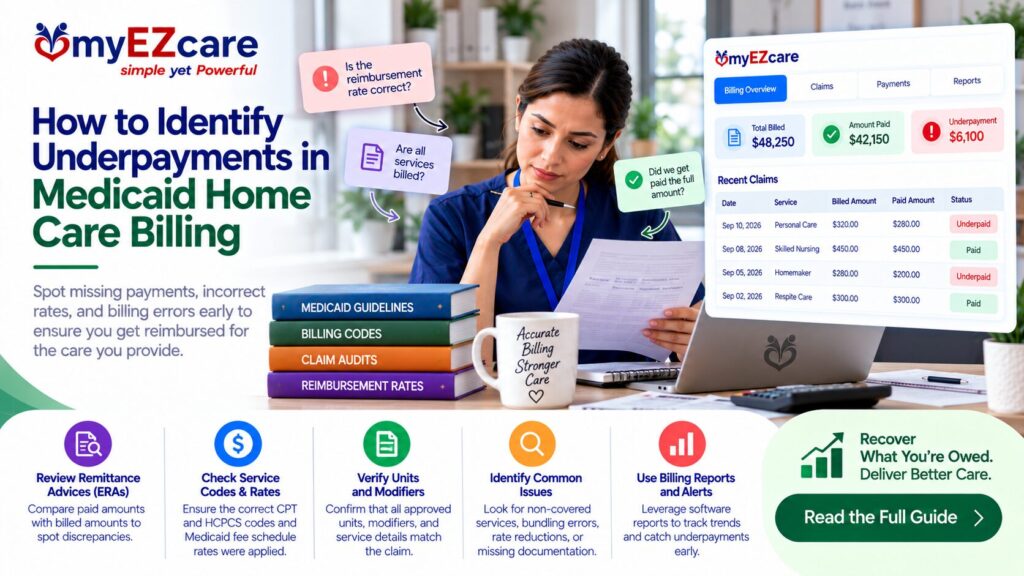
How to Identify Underpayments in Medicaid Home Care Billing

Summary A Medicaid claim can be successfully processed and paid—and still require further review. For home care agencies, an underpayment generally means the agency received less reimbursement than it expected based on the applicable Medicaid or managed care payment rules, contracted rate, authorized service, units, and other relevant billing requirements. Identifying potential underpayments requires more […]

How to Identify Underpayments in Medicaid Home Care Billing Read More »
Medicaid Home Care Claim

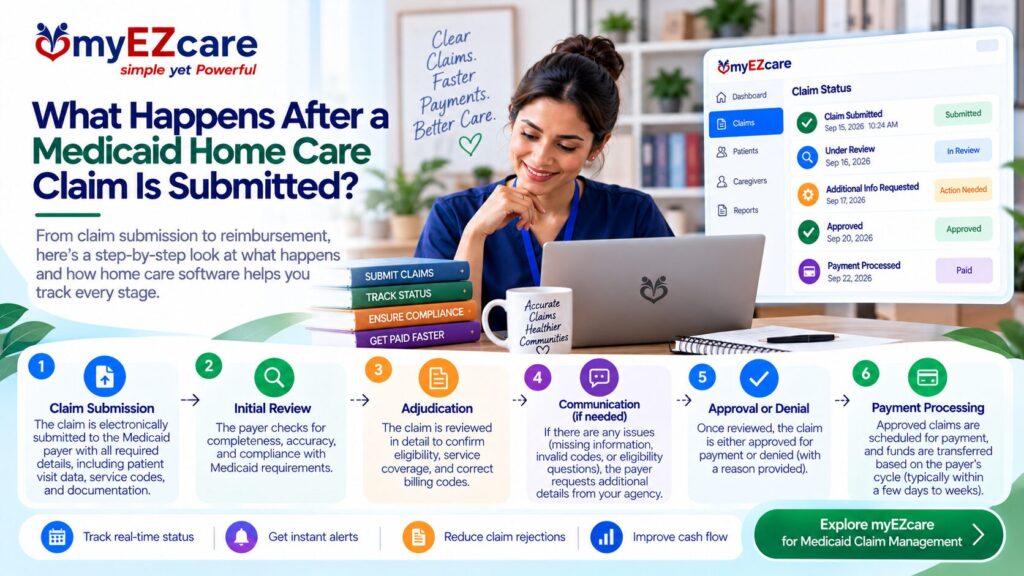
What Happens After a Medicaid Home Care Claim Is Submitted?

Summary Submitting a Medicaid home care claim is not the end of the billing process. Once a claim is transmitted, it generally moves through several stages before the agency receives a final payment determination. The claim may first be checked for basic data and transaction requirements. If it passes applicable initial checks, it can move

What Happens After a Medicaid Home Care Claim Is Submitted? Read More »

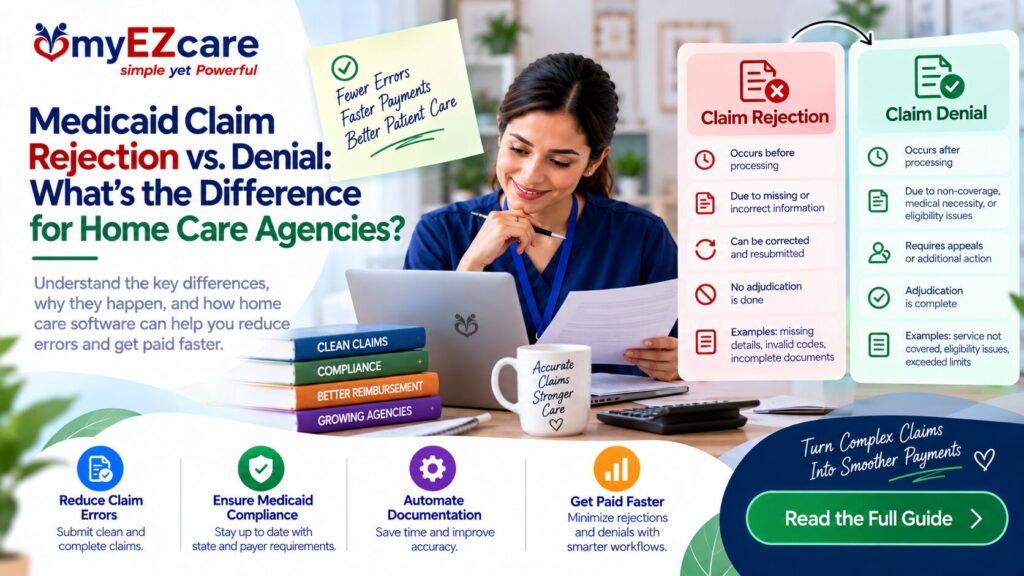
Medicaid Claim Rejection vs. Denial

Medicaid Claim Rejection vs. Denial: What’s the Difference for Home Care Agencies?

Summary A Medicaid claim that does not result in payment is not always a denial. Sometimes the claim was rejected before it entered the adjudication process. In other situations, the payer accepted the claim for processing but denied it after adjudication.   For home care agencies, understanding this difference matters because the next step may

Medicaid Claim Rejection vs. Denial: What’s the Difference for Home Care Agencies? Read More »

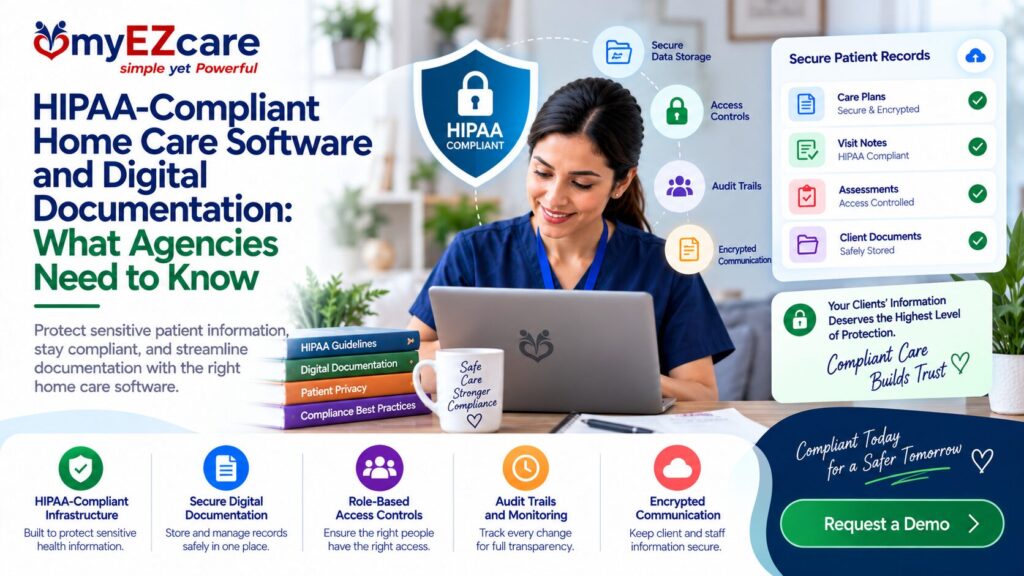
ome Care Software and Digital Documentation

HIPAA-Compliant Home Care Software and Digital Documentation: What Agencies Need to Know

Summary Home care agencies handle sensitive information every day, from patient demographics and care plans to visit notes, caregiver documentation, schedules, and billing-related records. Moving these workflows from paper files and spreadsheets to digital systems can improve accessibility and efficiency, but it also creates important privacy and security responsibilities.   For organizations subject to HIPAA,

HIPAA-Compliant Home Care Software and Digital Documentation: What Agencies Need to Know Read More »

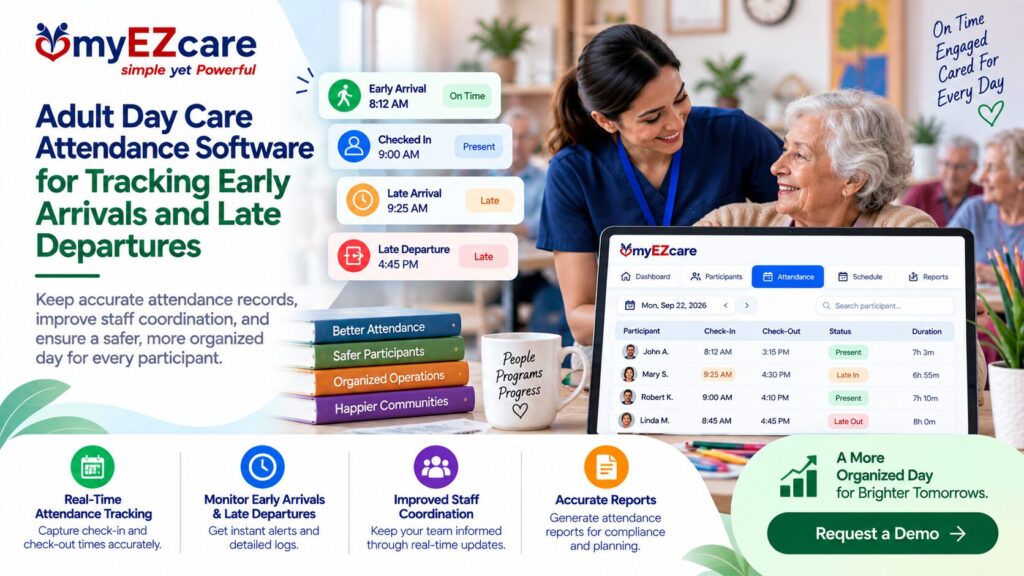
Adult Day Care Attendance Software

Adult Day Care Attendance Software for Tracking Early Arrivals and Late Departures

Summary Attendance tracking in adult day care involves more than knowing whether a participant arrived. Participants may arrive earlier than scheduled, leave later than expected, miss part of a scheduled day, or have their pickup time changed. When these differences are recorded manually, staff can spend additional time reviewing schedules, attendance sheets, and daily notes.

Adult Day Care Attendance Software for Tracking Early Arrivals and Late Departures Read More »

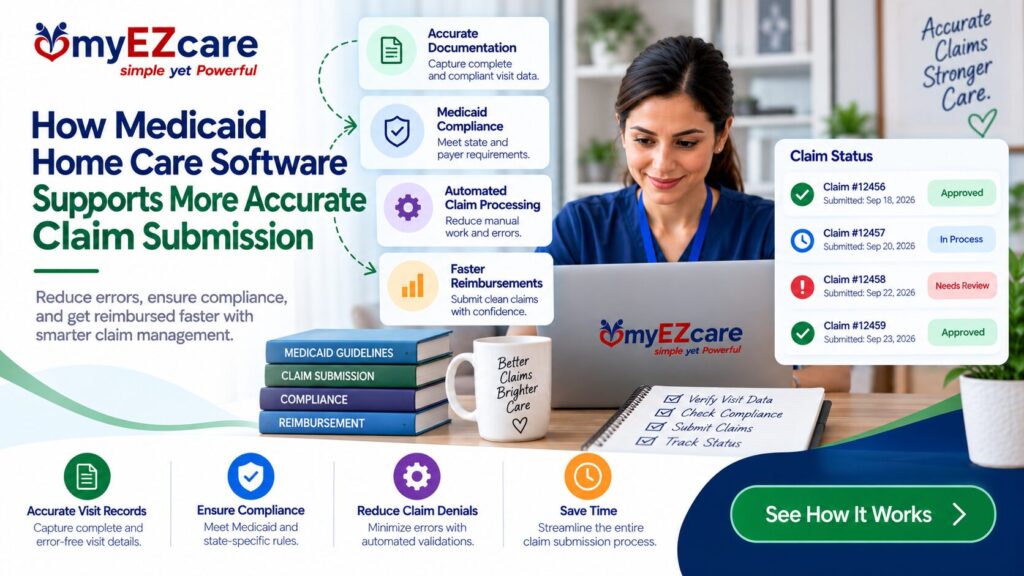
Accurate Claim Submission

How Medicaid Home Care Software Supports More Accurate Claim Submission

Summary Submitting accurate Medicaid claims requires home care agencies to coordinate patient information, authorized services, caregiver records, visit details, documentation, and billing data. When these details are managed across spreadsheets, paper records, and disconnected systems, errors and missing information can make the claims process more difficult.   Medicaid Home Care Software can help agencies organize

How Medicaid Home Care Software Supports More Accurate Claim Submission Read More »

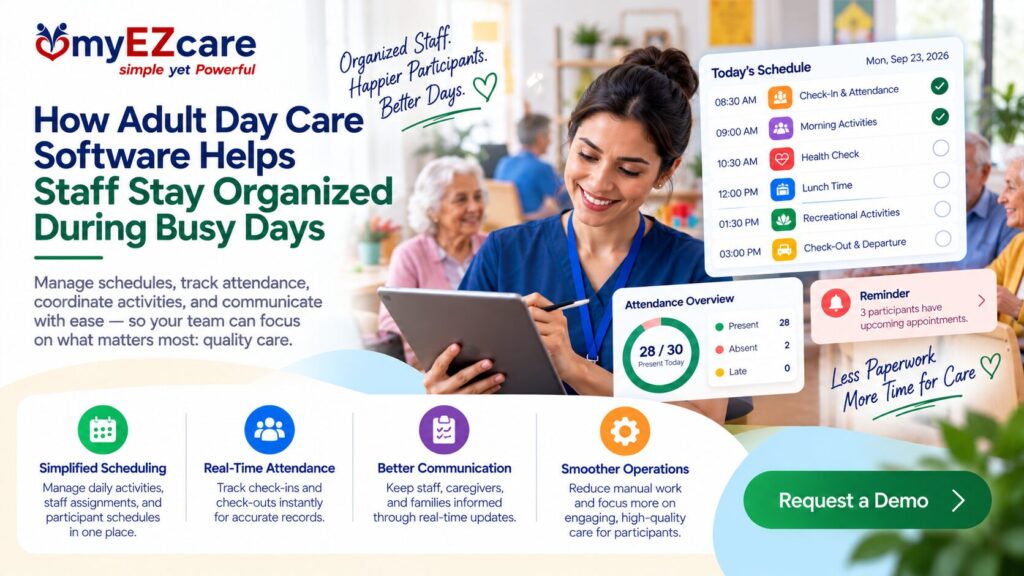
Staff Stay Organized During Busy Days

How Adult Day Care Software Helps Staff Stay Organized During Busy Days

Summary Busy days are normal in adult day care. Staff may need to coordinate participant schedules, document services, track attendance, communicate with caregivers and families, manage care information, and complete administrative tasks—all within the same shift. When these activities are managed through paper records, spreadsheets, phone calls, and disconnected systems, it becomes harder for staff

How Adult Day Care Software Helps Staff Stay Organized During Busy Days Read More »

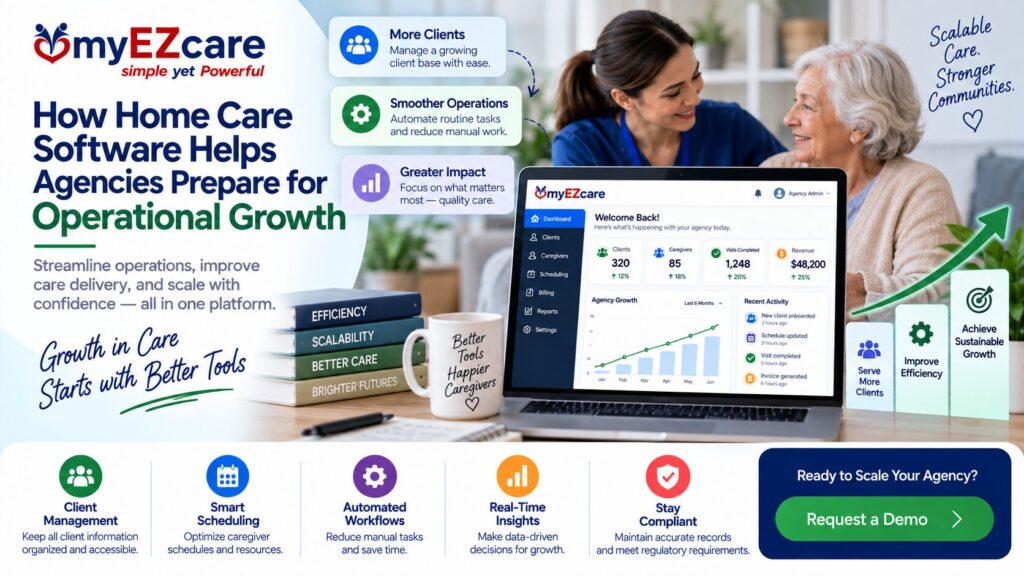
Operational Growth

How Home Care Software Helps Agencies Prepare for Operational Growth

Summary Growth is a positive sign for any home care agency, but growth also creates operational pressure. More patients mean more caregivers, more schedules, more documentation, more communication, and more administrative tasks. Processes that worked well with 20 patients can become difficult to manage when an agency reaches 100, 500, or more.   This is

How Home Care Software Helps Agencies Prepare for Operational Growth Read More »

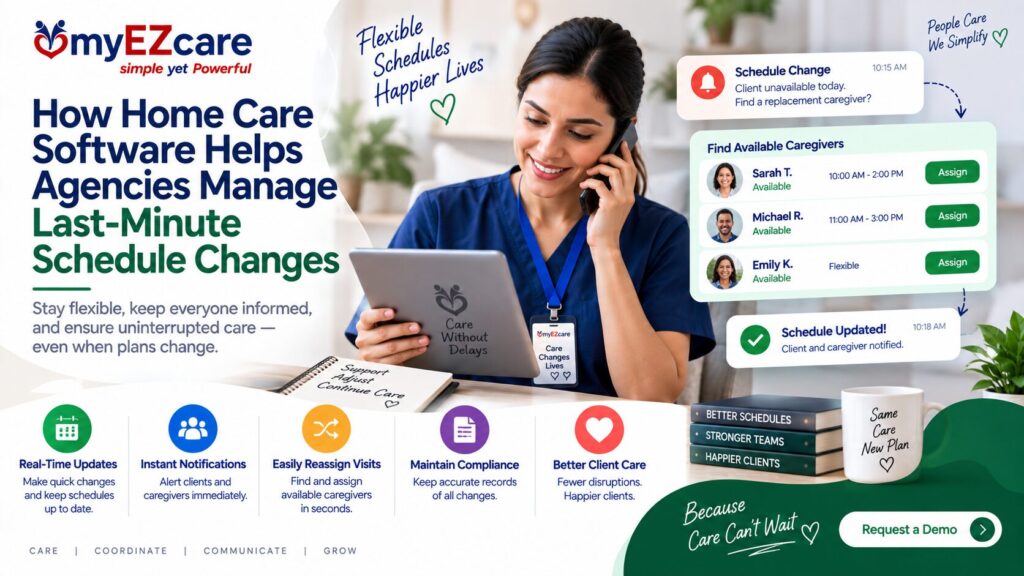
Agencies Manage Last-Minute Schedule

How Home Care Software Helps Agencies Manage Last-Minute Schedule Changes

Summary Last-minute schedule changes are a normal part of running a home care agency. A caregiver may call out sick, a patient may need to change a visit time, a family member may request additional support, or an unexpected situation may require a coordinator to rearrange the day’s schedule. When these changes are managed through

How Home Care Software Helps Agencies Manage Last-Minute Schedule Changes Read More »

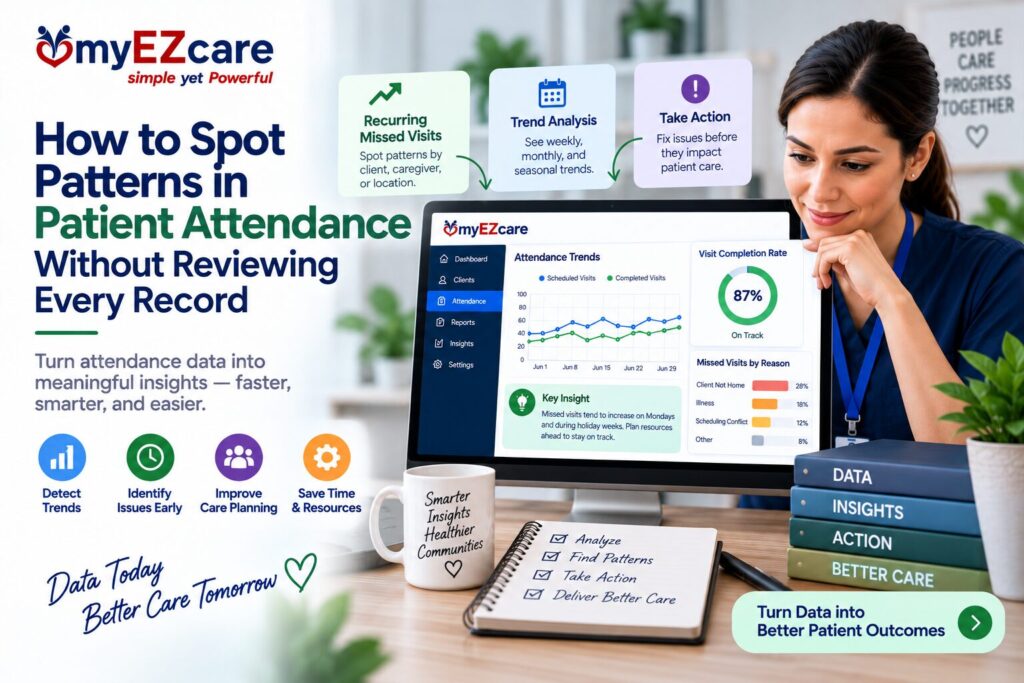
Patterns in Patient Attendance

How to Spot Patterns in Patient Attendance Without Reviewing Every Record

Summary Home care agencies generate a large amount of attendance data every day. Every scheduled visit, completed service, late arrival, missed visit, cancellation, and check-in can create another record for administrators to manage. When an agency has hundreds of patients and caregivers, manually reviewing every attendance record is not only time-consuming—it can make it harder

How to Spot Patterns in Patient Attendance Without Reviewing Every Record Read More »

Scroll to Top

Add Your Listing