Uncategorized

Medicaid Work Requirements

How Medicaid Work Requirements Will Shrink Your Client Census in 2027 — And the Reports You Need Now

Summary Medicaid work requirements home care agencies in expansion states are facing a new category of census management risk that operates differently from the authorization expirations and EVV compliance gaps that existing billing workflows were designed to catch. Nebraska’s May 2026 implementation is the first live case study — and its phased renewal enforcement structure […]

How Medicaid Work Requirements Will Shrink Your Client Census in 2027 — And the Reports You Need Now Read More »

Pennsylvania Adult Day Care Billing

Pennsylvania Adult Day Care Billing: How to Navigate OBRA and Medicaid Fee Schedules

Summary Pennsylvania adult day care billing is structurally complex in ways that don’t simplify with volume — serving more participants means managing more MCO relationships, more authorization renewal cycles, more rate schedule updates across programs that don’t coordinate their update timelines with each other, and more documentation standards that each require their own compliance discipline.

Pennsylvania Adult Day Care Billing: How to Navigate OBRA and Medicaid Fee Schedules Read More »

Health Revenue Cycle Management

Home Health Revenue Cycle Management: 5 Fixes That Accelerate Medicaid Reimbursements

Summary Home health revenue cycle management breakdowns are almost always upstream problems wearing downstream symptoms — denials that originate in OASIS documentation, billing delays that originate in manual handoffs, unbillable visits that originate in authorization gaps nobody was tracking. The two fixes that generate the fastest measurable improvement in home health revenue cycle management performance

Home Health Revenue Cycle Management: 5 Fixes That Accelerate Medicaid Reimbursements Read More »

AI-Powered Home Care Software Platform

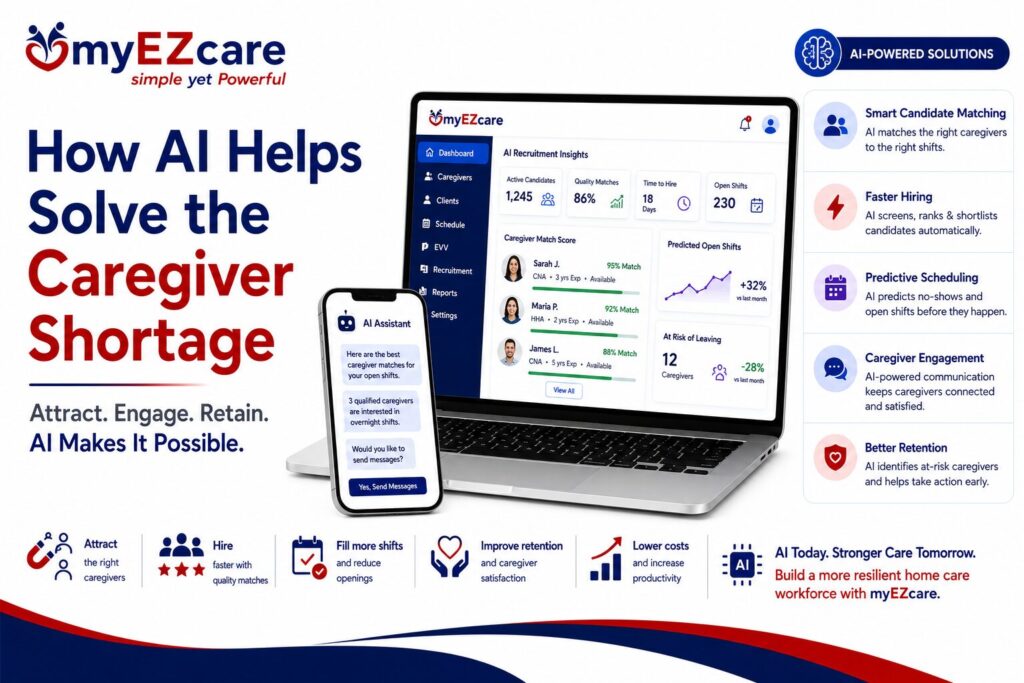
How to Evaluate an AI-Powered Home Care Software Platform: 8 Questions to Ask

Summary AI home care software evaluation that focuses on demo performance produces purchasing decisions that organizations frequently regret in production — while AI home care software evaluation that focuses on training data provenance, explainability, payer-specific performance, failure mode transparency, and roadmap honesty produces partnerships that actually improve daily operations over time. The two questions that

How to Evaluate an AI-Powered Home Care Software Platform: 8 Questions to Ask Read More »

EVV Audit Readiness Checklist for Medicaid Agencies in 2026

Summary An EVV audit readiness checklist isn’t a document you produce when a Medicaid program integrity request arrives — it’s the operational standard your agency runs against every month so that when a request does arrive, the answer is already organized and defensible. The two checklist categories that generate the most audit exposure when neglected

EVV Audit Readiness Checklist for Medicaid Agencies in 2026 Read More »

Predictive Scheduling vs. Caregiver-Client Matching

Predictive Scheduling vs. Caregiver-Client Matching: Which One Actually Reduces Burnout

Summary Predictive scheduling and caregiver-client matching address different dimensions of caregiver burnout in home care, and the agencies reducing burnout most effectively are using both capabilities in sequence — matching to build assignments that are sustainable from the start, and predictive scheduling home care to manage the operational volatility that creates acute stress for coordinators

Predictive Scheduling vs. Caregiver-Client Matching: Which One Actually Reduces Burnout Read More »

Respite Care as a Billable Service

Respite Care as a Billable Service Under GUIDE: Setting Up the Workflow

Summary GUIDE model respite billing is a genuine Medicare reimbursement opportunity for home care agencies willing to build the operational infrastructure — partner agreements, authorization tracking, visit documentation standards, and service record submission workflows — that the payment model requires before services begin rather than after. The two workflow elements that most directly protect reimbursement

Respite Care as a Billable Service Under GUIDE: Setting Up the Workflow Read More »

EVV After Cures 2.0

EVV After Cures 2.0: Biometrics, Geo-Tracking, and What’s Coming Next

Summary EVV Cures 2.0 is a legislative proposal, not enacted law — but the technical direction it represents is already shaping the EVV software market, and the agencies best positioned for whatever it ultimately requires are the ones running platforms that exceed the current federal floor rather than meeting it exactly. The two most important

EVV After Cures 2.0: Biometrics, Geo-Tracking, and What’s Coming Next Read More »

2026 Home Care Industry Report

2026 Home Care Industry Report: Workforce, AI Adoption & Growth Trends

Summary The home care industry in 2026 is a sector where the demand opportunity has never been larger and the operational constraints — workforce turnover, AI adoption gap, reimbursement pressure — have never been more consequential for agencies trying to capture it. The two findings from this year’s data that most directly translate into action

2026 Home Care Industry Report: Workforce, AI Adoption & Growth Trends Read More »

Mexico Home Care Rules & Regulations 2026

New Mexico Home Care Rules & Regulations 2026: Licensing, EVV & Medicaid Guide

Summary Home care agencies in New Mexico operate inside a Medicaid framework that has undergone significant structural change in a short period — the HSD-to-HCA transition, the Centennial Care-to-Turquoise Care renaming, and the layering of federal EVV mandates and OBBBA work requirements on top of an MCO-based delivery model that already requires payer-level configuration for

New Mexico Home Care Rules & Regulations 2026: Licensing, EVV & Medicaid Guide Read More »

Scroll to Top

Add Your Listing