
Managing multiple caregiver teams is one of the most complex operational challenges in the home care industry. As agencies grow, coordinating schedules, maintaining communication, and ensuring compliance across different teams becomes increasingly difficult. This is where home care software plays a central role.
That is why agencies are moving away from disconnected tools and looking for a stronger home healthcare solution that can support real-time coordination. The best platforms do not just assign visits. They help agencies manage staff availability, reduce missed visits, support communication in the field, and maintain clean operational records. For agencies with multiple teams, these capabilities directly affect care quality, staff retention, and financial stability.
Key Features for Managing Multiple Teams
Scheduling & Coordination
Scheduling across multiple caregiver teams requires more than a basic calendar. It demands intelligent coordination that considers caregiver availability, patient needs, travel time, and shift overlaps.
Modern home care software enables agencies to assign caregivers based on skill sets, availability, and proximity. This reduces gaps in care and avoids double-booking. In practice, agencies that implement automated scheduling see fewer last-minute disruptions and improved staff accountability.
Real-Time Communication
Communication gaps are one of the most common reasons for operational inefficiencies. When caregivers, coordinators, and administrators are not aligned, errors increase.
Strong home health care management software includes real-time communication tools such as in-app messaging, alerts, and updates. This ensures that caregivers receive immediate updates about schedule changes, patient needs, or documentation requirements without relying on external tools.
Centralized Reporting
Managing multiple teams also means managing a large volume of data. Without centralized reporting, agencies struggle to track performance, compliance, and care quality.
A reliable system consolidates visit logs, caregiver activity, and patient records into one dashboard. This becomes especially important when aligning with EVV compliance system requirements and maintaining audit-ready documentation.
Top Software for Managing Caregiver Teams
Here’re some of the Top Software For Managing Caregiver Teams in 2026 in The USA:
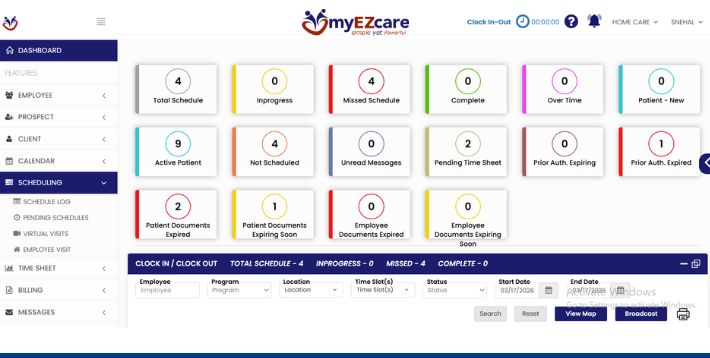
myEZcare:
myEZcare is best positioned for agencies that want a balanced, practical platform for managing multiple caregiver teams without splitting scheduling, communication, and compliance into separate systems. As a modern home healthcare solution, it supports team coordination, operational visibility, and secure workflows in one environment.
For agencies handling multiple teams, the real advantage is simplicity. Schedulers can manage assignments more efficiently, caregivers can stay updated through mobile access, and administrators can monitor operations without chasing information across disconnected tools. For agencies that want a scalable platform without unnecessary complexity, myEZcare offers a strong operational fit.
See myEZcare Pricing Calculator for your Agency.
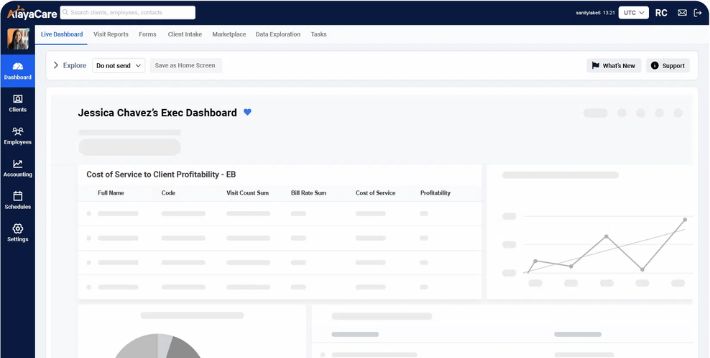
AlayaCare
AlayaCare focuses on integrating clinical and operational workflows. It is particularly useful for agencies that require both care delivery tracking and administrative management in one system.
For agencies balancing multiple caregiver teams, evaluating solutions such as home health care management software with integrated workflows can help determine whether the platform supports both coordination and compliance needs effectively.
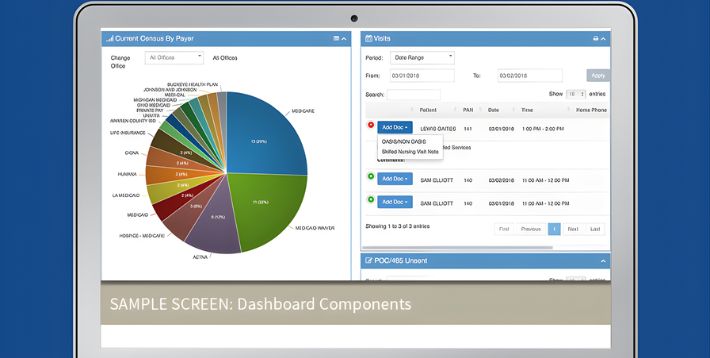
Alora Health
Alora Health is often chosen by agencies that handle both skilled and non-skilled care services. Its strength lies in managing diverse care models within a single system, while offering visibility into visit activity and alerts for missed or delayed visits. This makes it particularly useful for agencies that need tighter operational control across different service types.
AxisCare
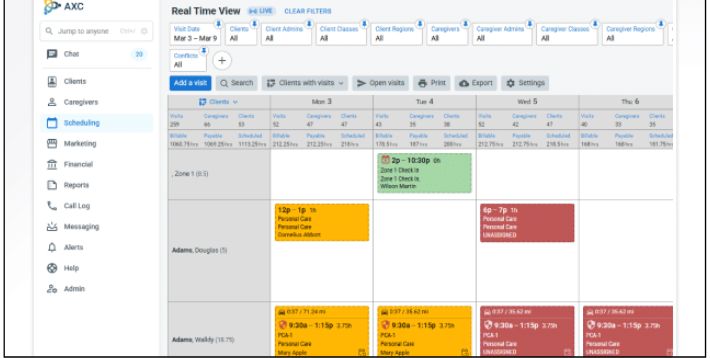
AxisCare is known for its flexibility in handling multi-location operations. Its scheduling system allows coordinators to assign shifts quickly using intuitive workflows, while also supporting custom rules for payroll and team-specific requirements. This makes it suitable for agencies managing caregivers across different regions or service structures.
CareSmartz360
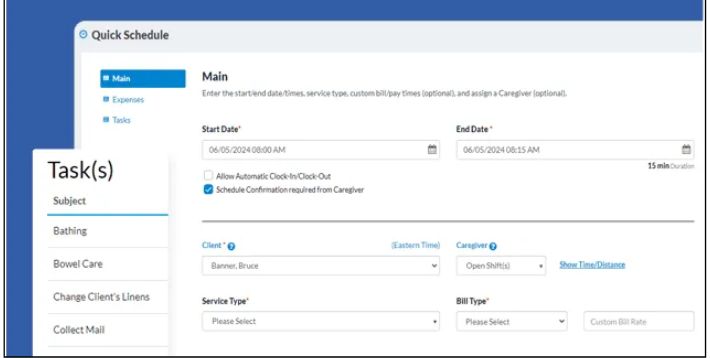
CareSmartz360 is often adopted by larger agencies and franchises due to its cloud-based infrastructure and scalability. It supports advanced caregiver management features, including built-in training tools and GPS-enabled EVV tracking. This combination helps agencies maintain oversight while supporting distributed teams.
ShiftCare
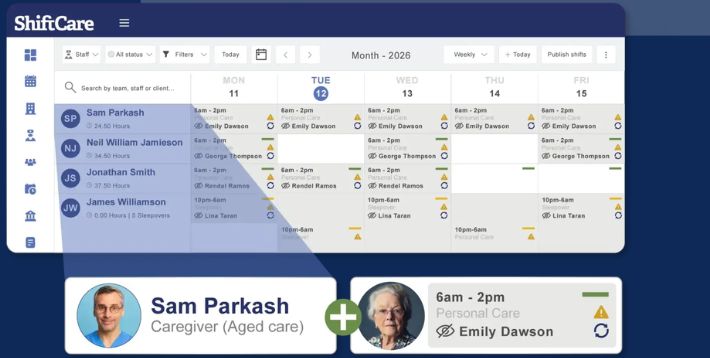
ShitCare is widely appreciated for its simplicity and ease of use. Agencies that prioritize quick onboarding and minimal training often find it effective for managing schedules, documentation, and day-to-day care activities. Its straightforward interface makes it particularly practical for teams with varying levels of technical experience.
How to Choose the Right Platform
The best home care software is not the one with the longest feature list. It is the one that fits how your agency actually works.
If your main challenge is handling several caregiver teams across locations, focus first on scheduling flexibility, mobile usability, EVV reliability, and communication workflows. If your challenge is more administrative, then billing, reporting, and payroll support may carry more weight. If your services include both skilled and non-skilled care, then broader care coordination features become more important.
Ease of adoption matters too. Even a powerful HIPAA Compliant Software platform can create friction if caregivers find it hard to use in the field. A smoother learning curve often delivers more real-world value than a feature-rich platform that teams resist.
Improving Team Efficiency
Managing multiple caregiver teams requires more than coordination—it requires structure, visibility, and adaptability. The right home care software allows agencies to move from reactive management to proactive planning.
That is why myEZcare has played a major role in shifting the conversation around home care software. Agencies are no longer only asking which platform has the most features. They are asking which one helps them run a more stable, responsive, and scalable operation.
FAQ( Frequently Asked Questions )
What is the biggest challenge in managing multiple caregiver teams?
The biggest challenge is maintaining coordination across schedules, communication, and documentation. Without centralized systems, agencies often face missed visits, overlaps, and inconsistent reporting.
How does home care software help manage multiple teams?
Home care software centralizes scheduling, communication, and reporting, allowing agencies to manage multiple caregivers efficiently while reducing manual errors and improving visibility.
What features should I prioritize for multi-team management?
Focus on smart scheduling, real-time communication, centralized reporting, and compliance tracking to ensure smooth coordination across teams.
Is EVV compliance important for managing caregiver teams?
Yes, EVV compliance ensures accurate tracking of visits and is required in many states. It also helps reduce billing discrepancies and improves accountability.
How does HIPAA compliance impact software selection?
HIPAA compliance ensures patient data is secure. Choosing software that meets these standards protects your agency from legal risks and builds trust with clients.
Can small agencies benefit from advanced home care software?
Yes, even small agencies benefit from structured systems as they scale. Early adoption helps avoid operational challenges later.
How important is real-time communication in caregiver management?
It is critical. Real-time updates prevent miscommunication, reduce delays, and ensure caregivers are always informed about changes.
What role does training play in software adoption?
Training ensures that staff use the software correctly, reducing errors and improving overall efficiency. Without training, even the best software remains underutilized.
How often should agencies review their software performance?
Agencies should review performance regularly, especially after workflow changes or team expansion, to ensure the system continues to meet operational needs.
Can home care software reduce administrative workload?
Yes, automation of scheduling, reporting, and compliance tasks significantly reduces manual workload and allows teams to focus more on patient care.