
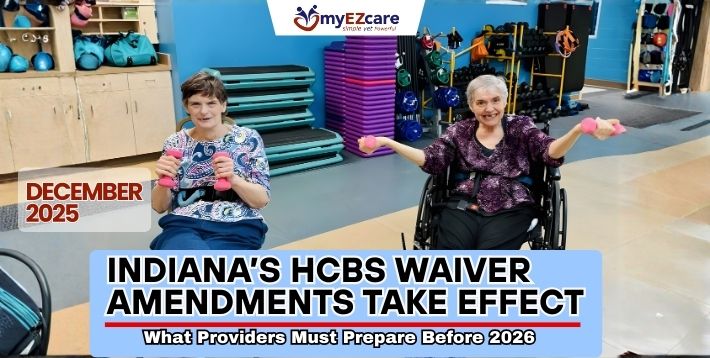
Indiana has entered a major transition period this month as the state’s 2025 Home and Community-Based Services (HCBS) waiver amendments move from planning to implementation. Although public comment closed earlier in the year, December 2025 marks the moment when providers must begin aligning their operations, documentation systems, and service delivery processes with the new expectations outlined for the CIH and Family Supports waivers.
What makes this update especially important is that it arrives at the same time HHS continues reminding states about heightened audit activity for HCBS programs. For agencies offering home care, adult day services, and community-based support, this creates a dual responsibility: meet the new waiver requirements and be prepared for stricter review in early 2026.
What Is Changing Under Indiana’s Waiver Amendments?
The December transition includes updates that directly affect provider workflows. Rate structures are being adjusted for select services, documentation expectations are becoming more precise, and definitions for community-based support are shifting toward measurable outcomes and greater participant autonomy. This is not merely administrative fine print; it is a signal that Indiana is aligning its waivers with national accountability trends across disability services.
To clarify how these shifts impact daily operations, here is a summary of two key areas that providers must watch closely.
| Area of Change | What It Means in Practice |
| Updated service definitions & expectations | Providers must demonstrate clearer documentation of goals, interventions, and outcomes. Progress notes need more consistency, and agencies must adopt transparent reporting workflows. |
| Adjusted billing & audit readiness | Claims must match new service guidelines. Any mismatch between EVV, plan of care, and billing increases audit risk in 2026. |
These changes reinforce one idea: Indiana is moving toward stronger oversight, and agencies must modernize their internal processes to keep pace. Providers still relying on paper logs or fragmented tools may find it increasingly difficult to remain compliant during this transition period.
Why the December Timing Matters for Agencies
Because the amendment’s effective date aligns with year-end, agencies have very little room for error. Staffing reviews, care plan updates, EVV alignment, and documentation accuracy all need immediate attention. Providers who wait until early 2026 may face avoidable denials, backlogs, or compliance violations.
Many agencies are turning toward centralized digital systems to handle these requirements more efficiently. Agencies are moving to the Platforms designed specifically for developmental disability services such as myEZcare who is the best DDD software provider in Indiana help unify EVV, documentation, scheduling, and billing so that providers remain aligned with both waiver changes and audit expectations. The transition is easier when every workflow connects to a single, compliant record.
Where Indiana Providers Are Feeling the Most Pressure
Providers across Indiana consistently report concerns in three areas: ensuring progress note accuracy, maintaining EVV consistency, and preparing for possible audits tied to the amendment rollout. Each of these concerns becomes more manageable when processes are connected through reliable technology rather than manual tracking.
Another growing priority is the need for more accessible communication with families and case managers. As documentation expectations rise, families want transparency, and agencies need workflows that support fast and accurate updates. This is where broader home care solutions come into play, helping agencies create a more structured and reliable communication system.
Preparing for 2026 With Confidence
Although the December 2025 waiver rollout may feel overwhelming, it also presents an opportunity. Agencies that invest in tightening their operations now will feel more control as new statewide expectations take hold next year. Modernized systems reduce administrative pressure, reduce claim rejections, and make audit preparation part of daily operations instead of a stressful scramble.
A final area worth watching is how Indiana will measure provider performance under the updated definitions. Clearer documentation and integrated systems will make these measures easier to meet. The agencies that adapt early will experience smoother transitions, stronger compliance levels, and higher trust from families and the state.
FAQs
1. How will Indiana’s December 2025 waiver changes affect my current documentation process?
You will need more consistent, goal-aligned documentation. Progress notes should reflect the updated service definitions and must clearly tie interventions to outcomes.
2. Will these waiver amendments change how providers are audited in 2026?
Yes. HHS has already signaled increased HCBS oversight. Indiana providers should expect more detailed reviews of EVV data, billing accuracy, and care plan alignment.
3. Do I need to adjust my EVV workflows because of these changes?
Indirectly yes. EVV data must now match updated service expectations. Any inconsistency between visit logs and the service plan may lead to denials.
4. Are smaller agencies required to update their systems too?
All agencies serving HCBS participants will be affected. Smaller agencies may feel the impact more strongly because manual workflows make compliance more difficult.
5. What technology do Indiana providers typically use to stay aligned with HCBS waiver updates?
Many agencies shift to integrated digital platforms such as Indiana DDD software solutions that combine EVV, billing, documentation, and audit-ready reports in one place.